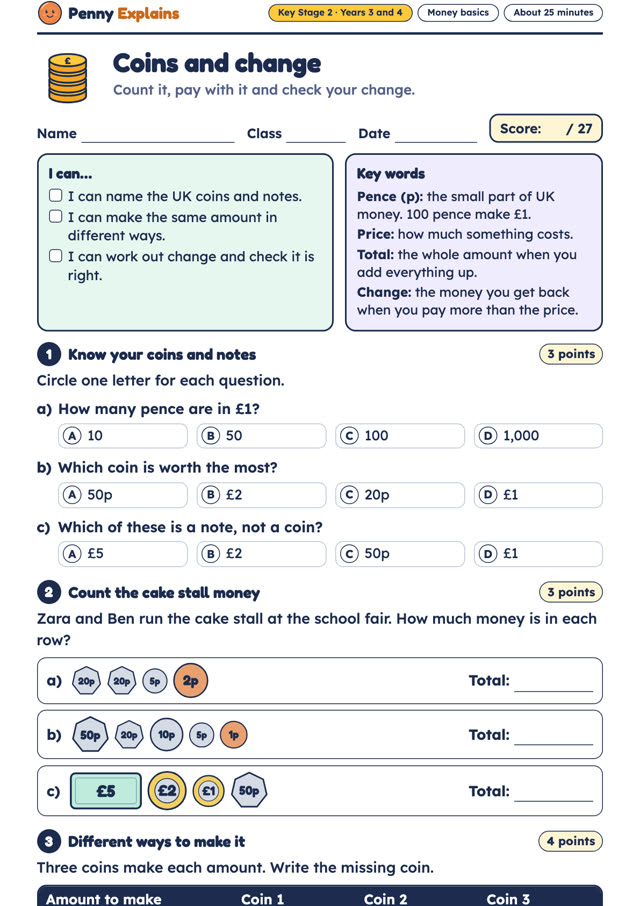
Coins and change
Count it, pay with it and check your change.
Years 3 and 425 min
Short animated videos, printable worksheets and games that show children, teenagers and adults how money really works. No sign-up. No adverts.
Start here
Everything is sorted by age, from Year 3 to grown-ups.
Ready-made lessons
Each topic comes as a short video, a worksheet with answers, and a game. Enough for one lesson, with nothing to prepare.
A 60 to 90 second animated video explains one idea with an everyday example, and ends on a question.
A printable worksheet for the right year group, with answers and teaching notes.
A quick game to practise making the decision, not just knowing the fact.
A take-home question so the conversation carries on with family.
Videos
44 short videos so far, plus 7 full lessons. All with captions.
 1:21
Long ago, people swapped eggs for bread. Find out why money made life much easier, and what it is really for.
 1:20
Food and a warm home are needs. Sweets and the newest trainers are wants. Learn to tell them apart, and why needs come first.
 1:05
The bank pays you to save and charges you to borrow. Here is why, with £100 and a piggy bank.
 1:49
Compound interest is interest that earns interest. See £1,000 grow over 30 years, and why starting early matters more than starting big.
 1:30
A debit card spends your own money. A credit card spends the bank’s money, which you pay back. Here is the difference, and why it matters.
 1:28
A scam is a trick to steal your money or your details. Learn the warning signs, and exactly what to do if you spot one.
Try it
Move the sliders. The yellow part is money you put in. The blue part is interest: money your money earned.
An example, not a promise. Real interest rates go up and down.
You would have
£0
The whole map
From “what is money?” to mortgages, pensions and investing. New videos and worksheets are added all the time.
19 topics
13 topics
19 topics
14 topics
15 topics
14 topics
9 topics
16 topics
9 topics
16 topics
11 topics
13 topics
7 topics
8 topics
Worksheets
32 worksheets for Key Stage 2, 3 and 4, each with an answer sheet and teaching notes.
Count it, pay with it and check your change.
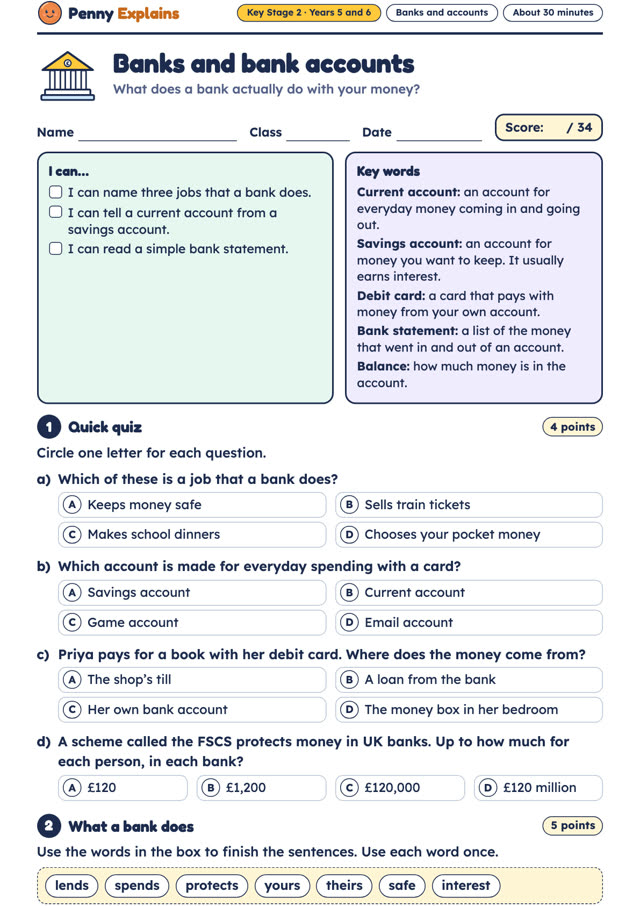
What does a bank actually do with your money?
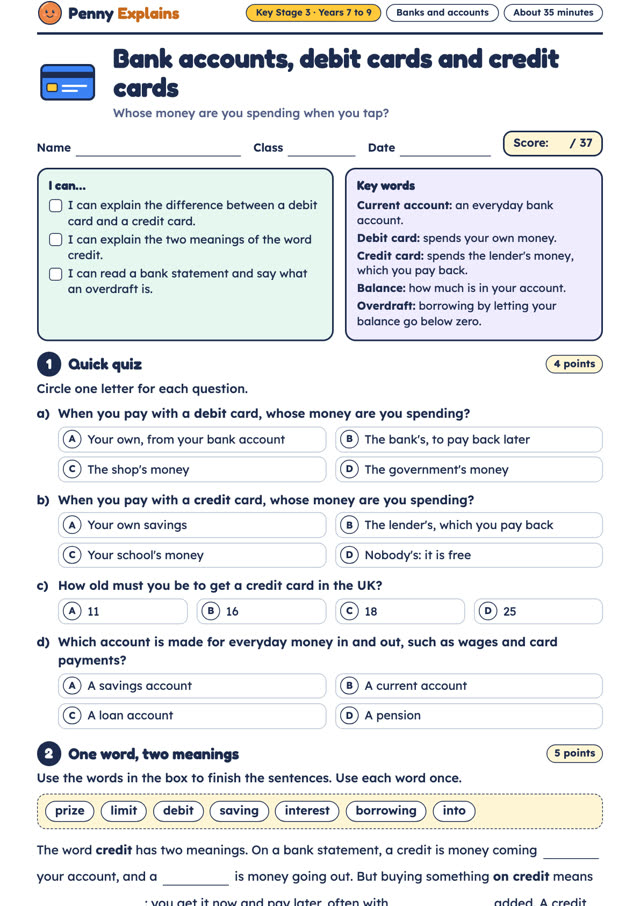
Whose money are you spending when you tap?
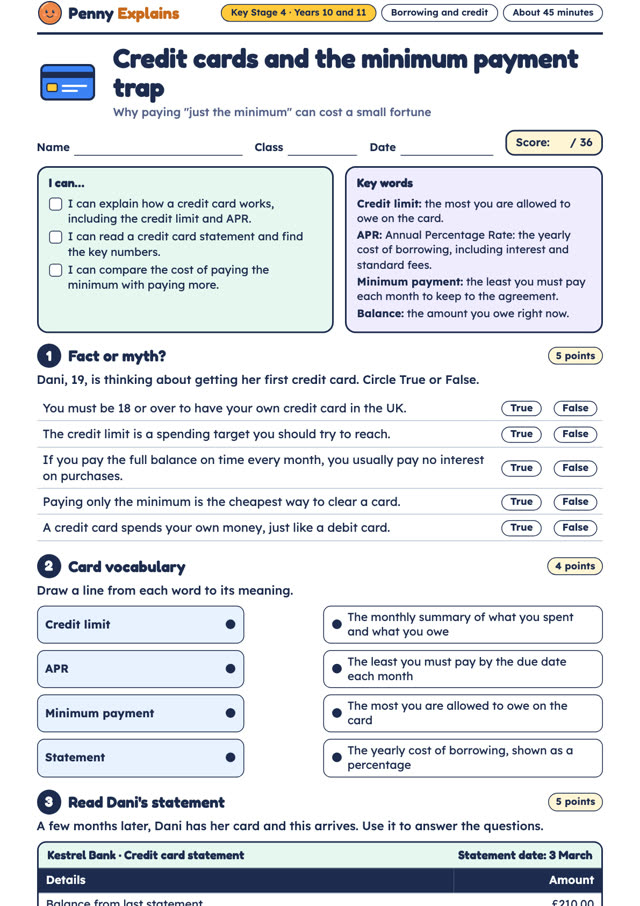
Why paying "just the minimum" can cost a small fortune
Games
Quick games that work on a whiteboard, a laptop or a phone. Nothing to install.
Things whizz past. Is each one a need or a want? Beat the clock and build a streak.
Make the price using real UK coins. Can you do it with the fewest coins?
Four weeks, one savings goal and lots of temptations. Every choice has a cost.
Real or fake? Read each message and decide before the scammer wins.
Everything is free to use in class, mapped to the Financial Education Planning Framework, and needs no logins. From September 2028 financial education becomes part of the primary curriculum in England: we are building for that now.
How schools can use Penny Explains