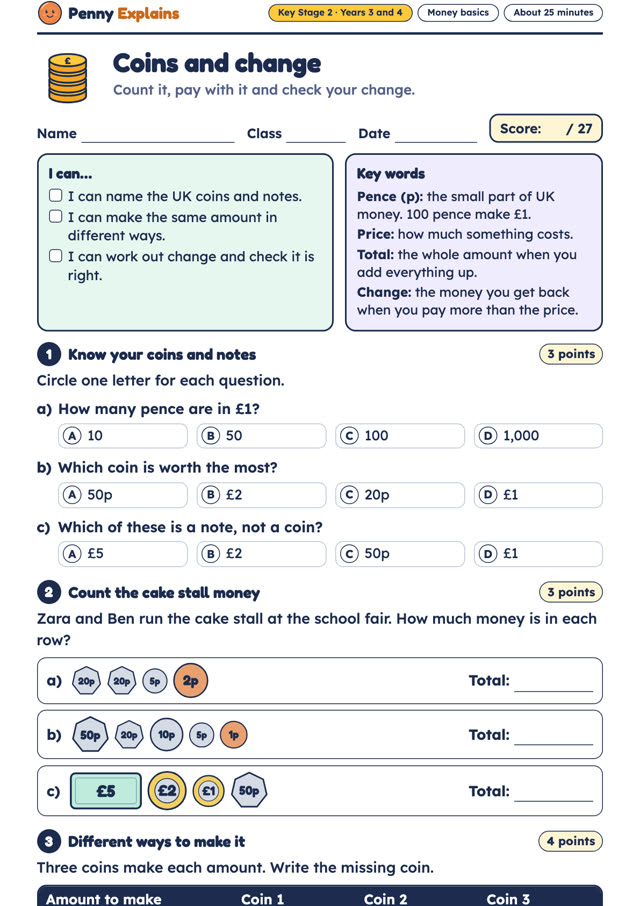
Coins and change
Count it, pay with it and check your change.
Years 3 and 425 min
Worksheets
Every worksheet is a PDF sized for A4, with a separate answer sheet and teaching notes. They are free to print and copy for teaching. The layout is dyslexia-friendly and works in black and white.
Years 3 and 4, ages 7 to 9
Count it, pay with it and check your change.
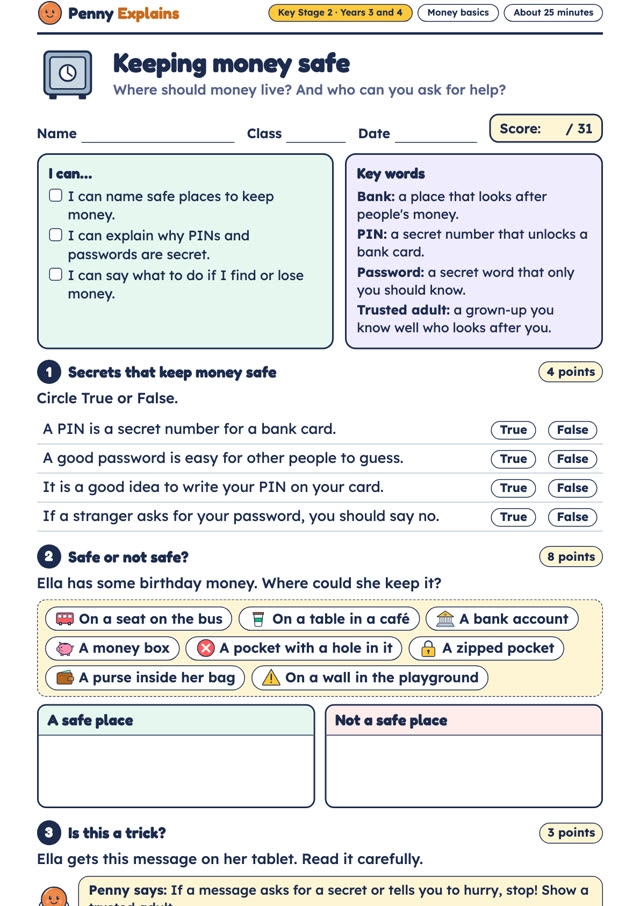
Where should money live? And who can you ask for help?
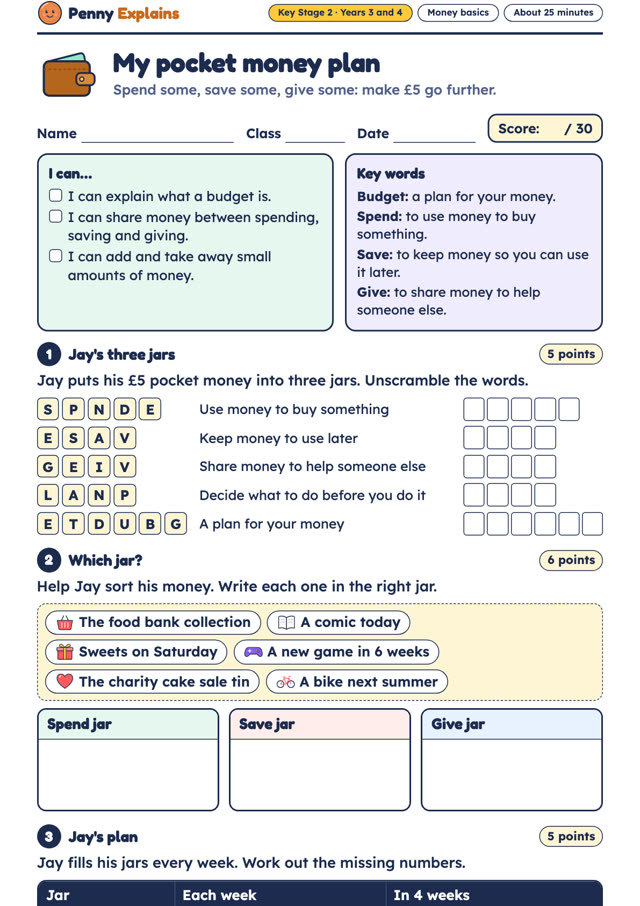
Spend some, save some, give some: make £5 go further.
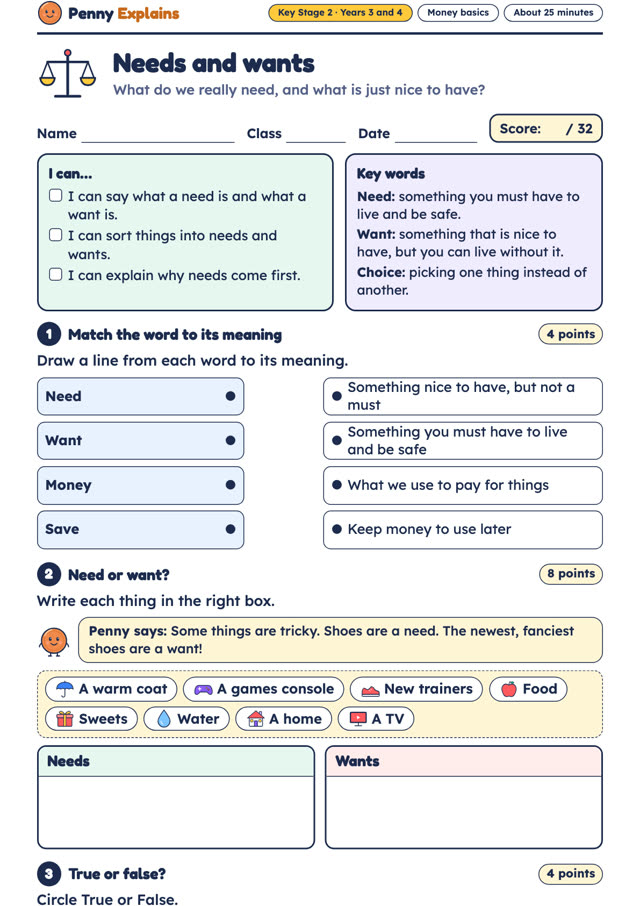
What do we really need, and what is just nice to have?
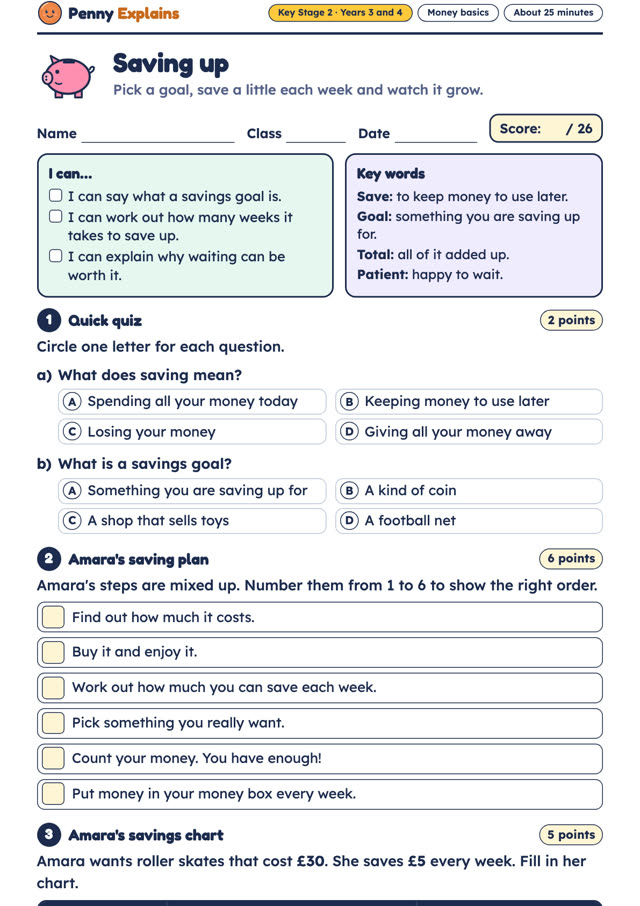
Pick a goal, save a little each week and watch it grow.
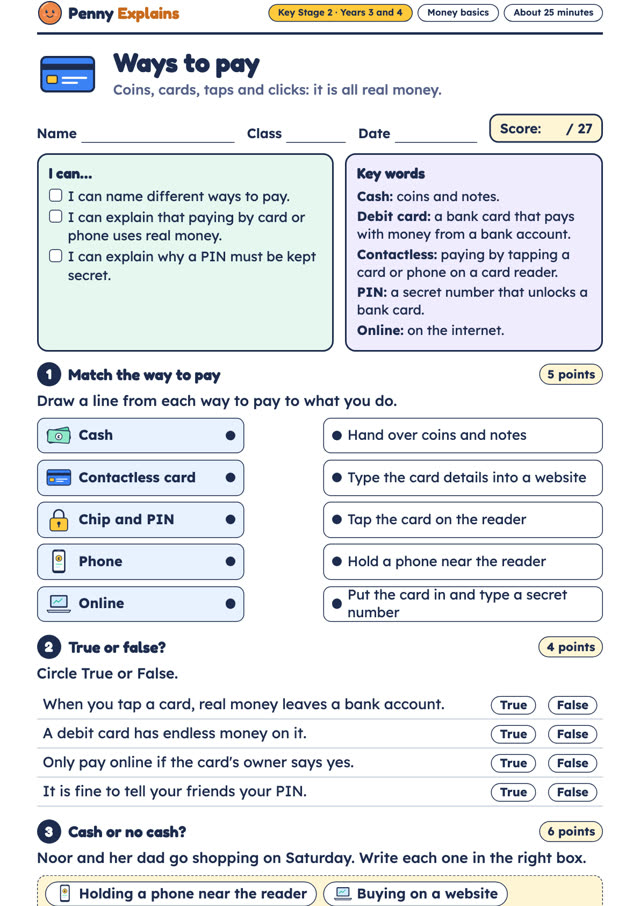
Coins, cards, taps and clicks: it is all real money.
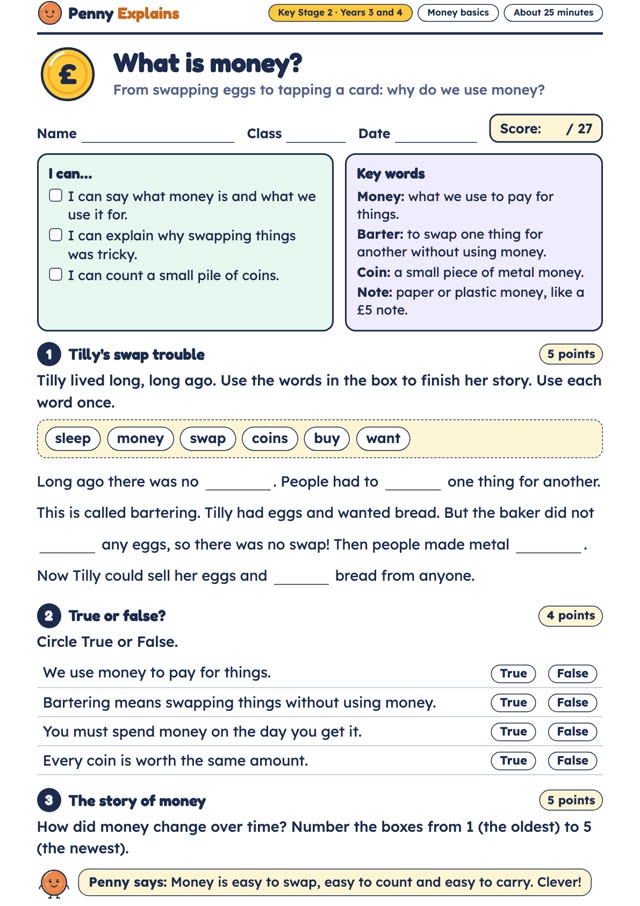
From swapping eggs to tapping a card: why do we use money?
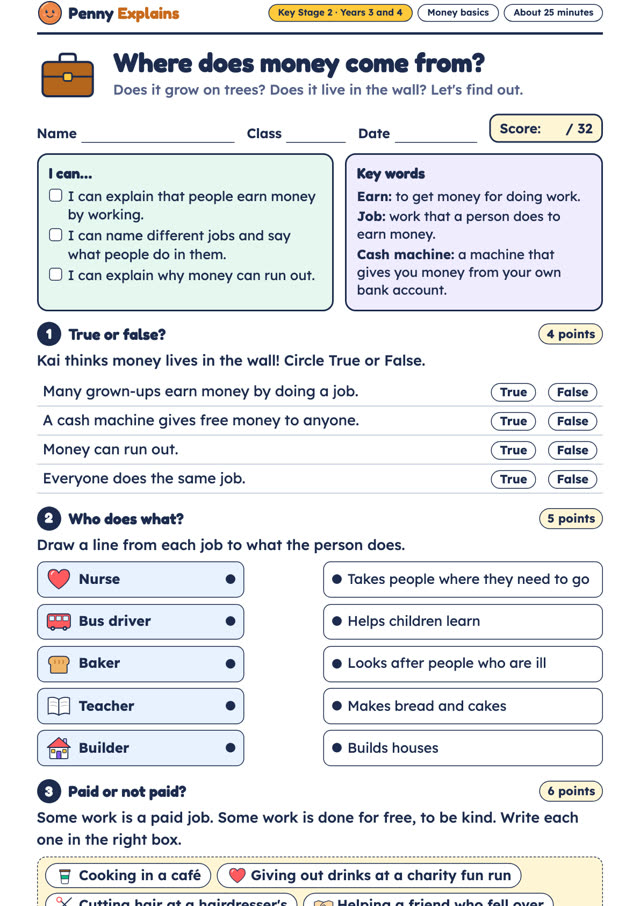
Does it grow on trees? Does it live in the wall? Let's find out.
Years 5 and 6, ages 9 to 11
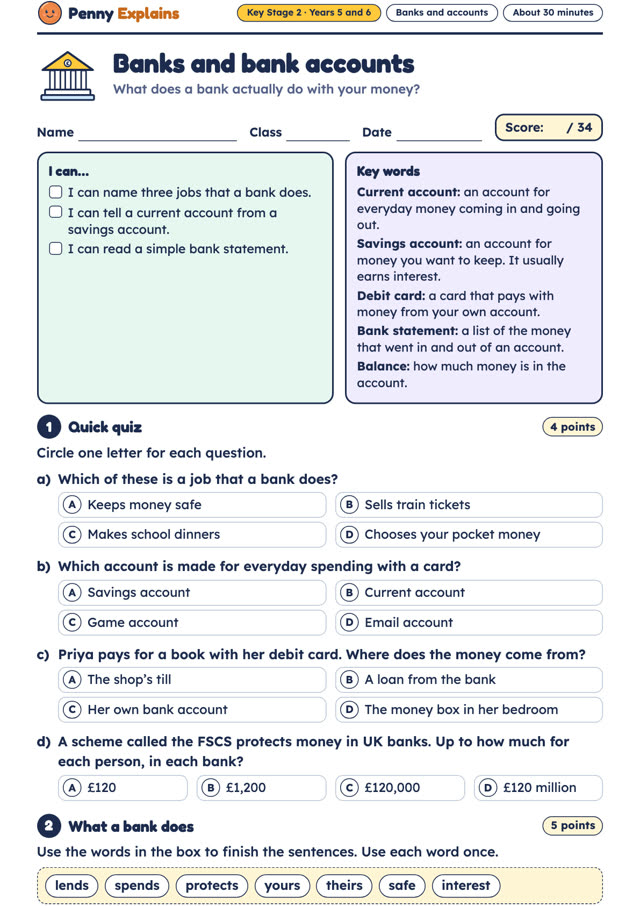
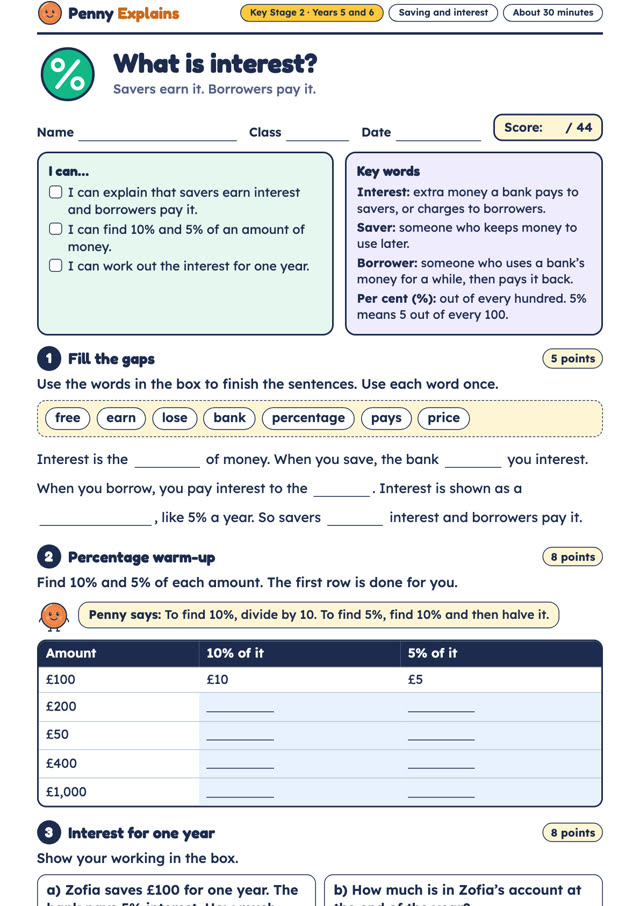
What does a bank actually do with your money?
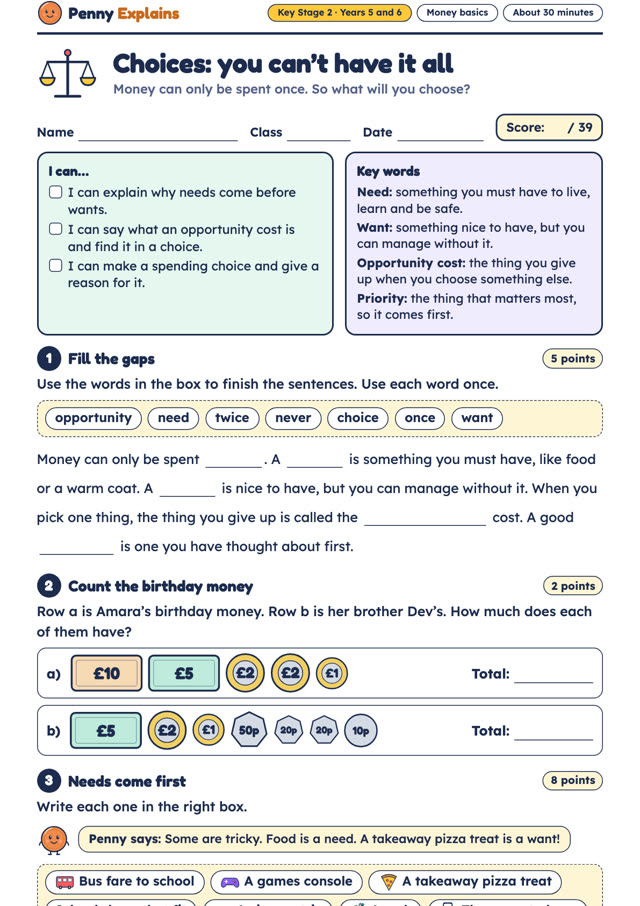
Money can only be spent once. So what will you choose?
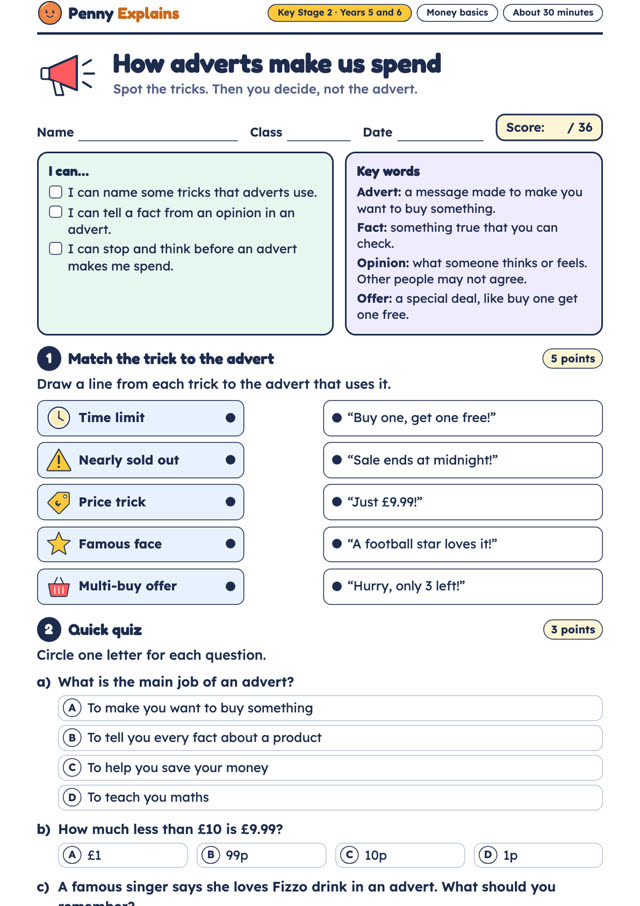
Spot the tricks. Then you decide, not the advert.
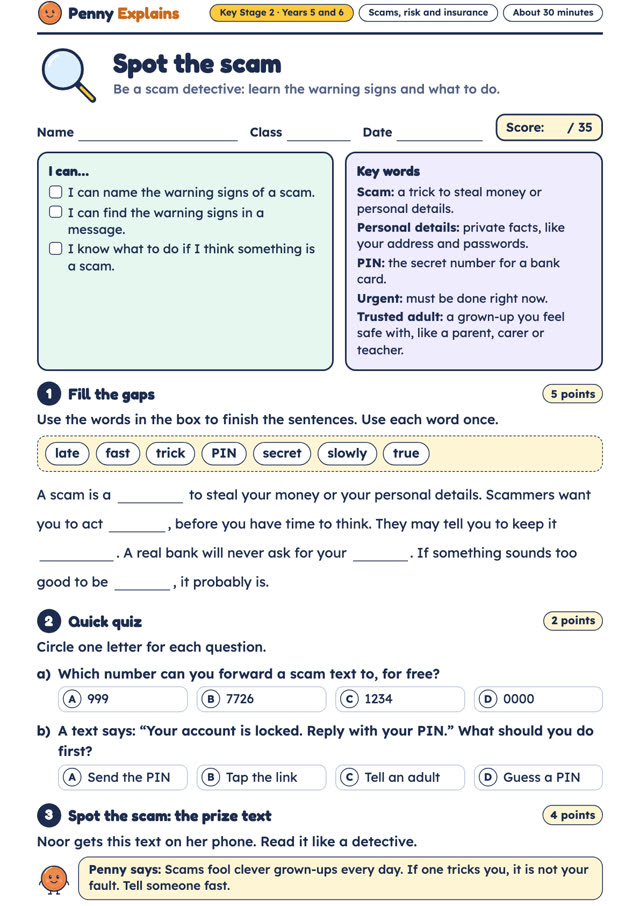
Be a scam detective: learn the warning signs and what to do.
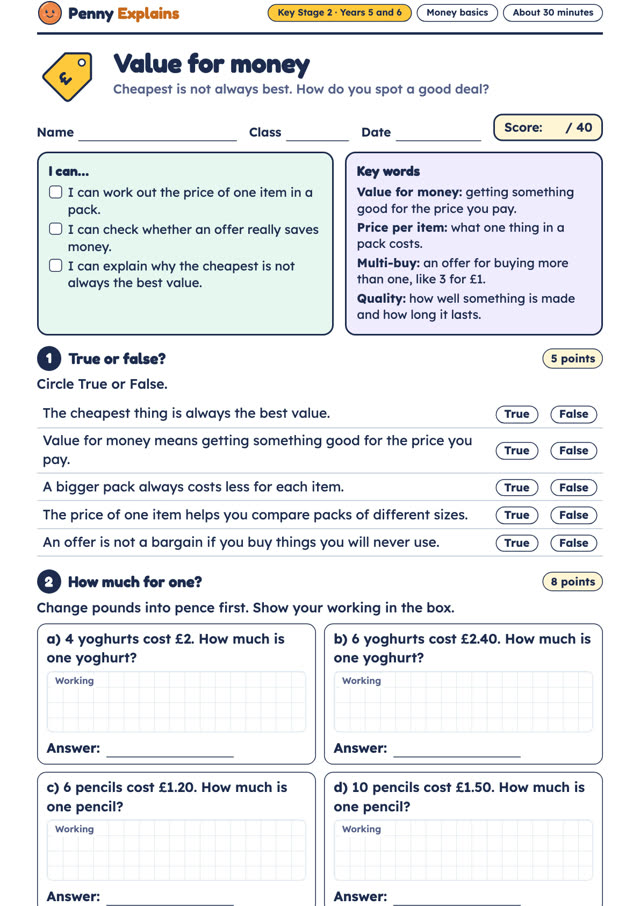
Cheapest is not always best. How do you spot a good deal?
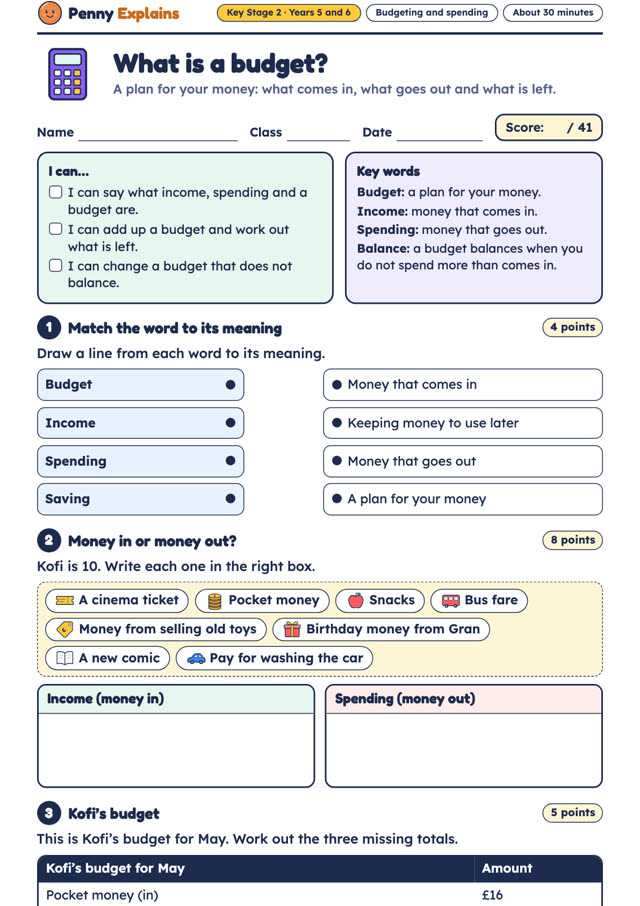
A plan for your money: what comes in, what goes out and what is left.
Years 7 to 9, ages 11 to 14
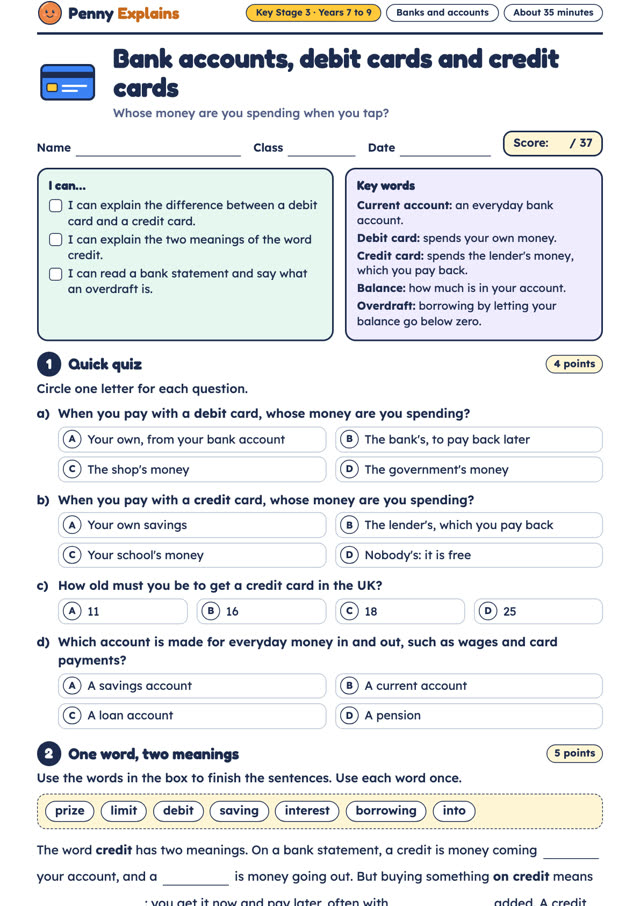
Whose money are you spending when you tap?
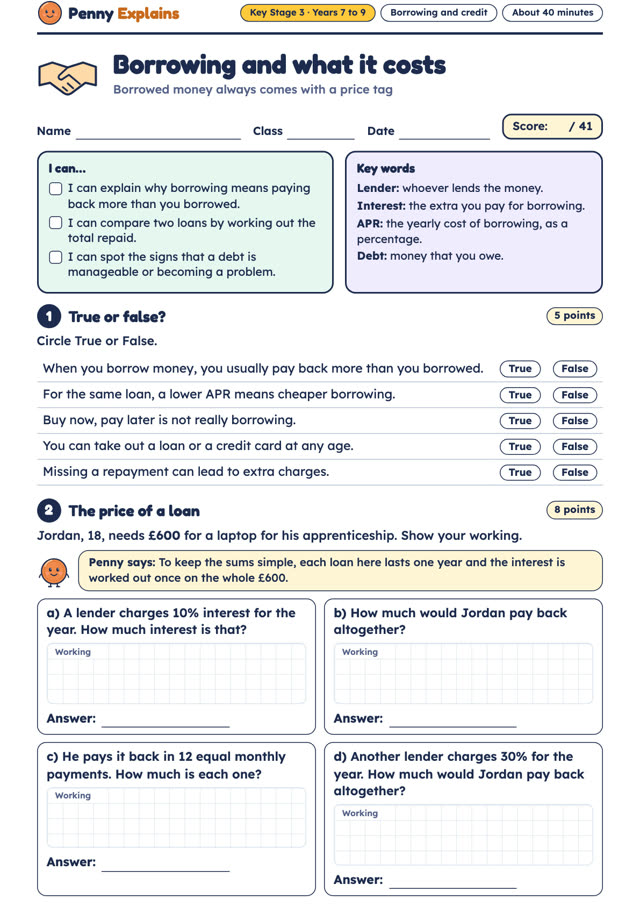
Borrowed money always comes with a price tag
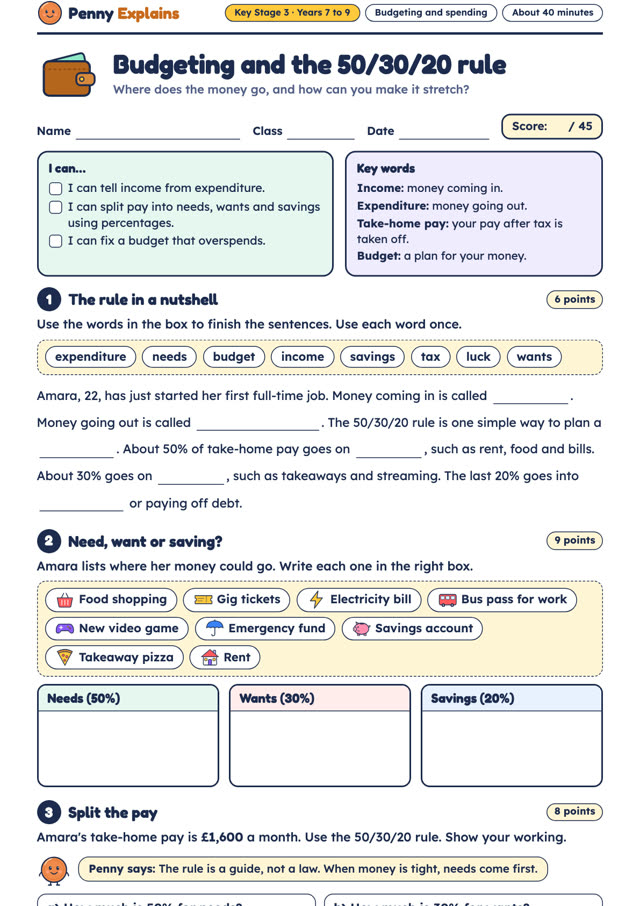
Where does the money go, and how can you make it stretch?
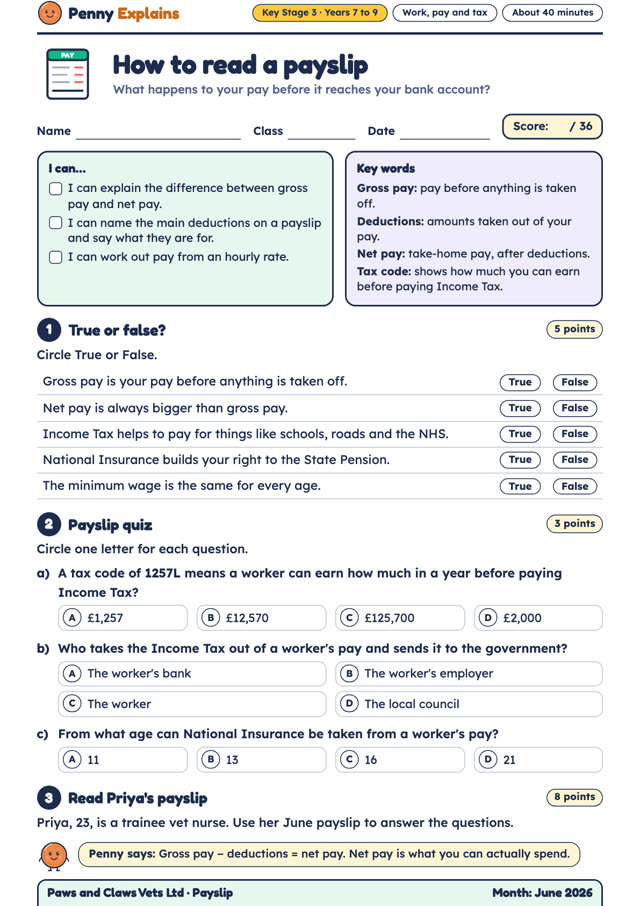
What happens to your pay before it reaches your bank account?
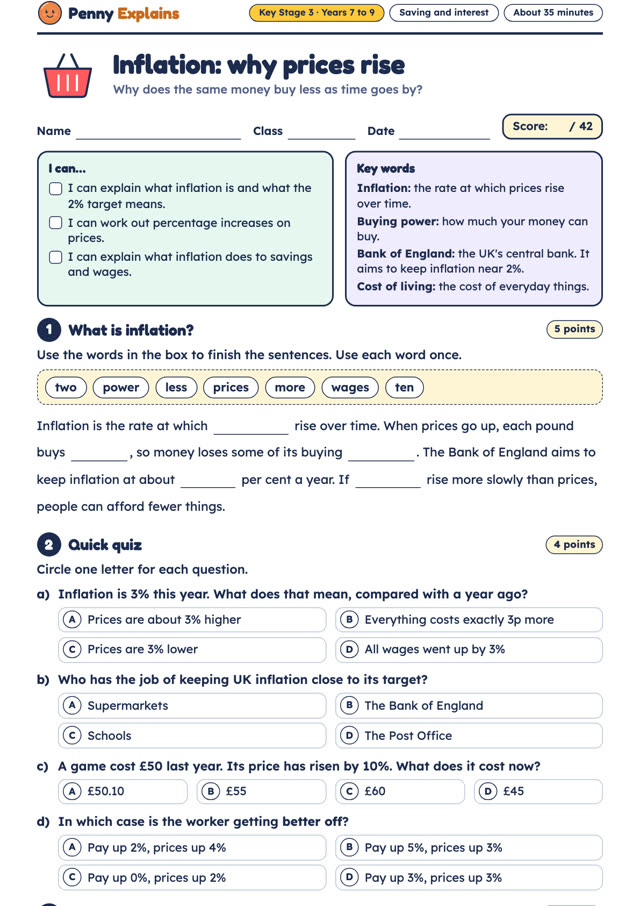
Why does the same money buy less as time goes by?
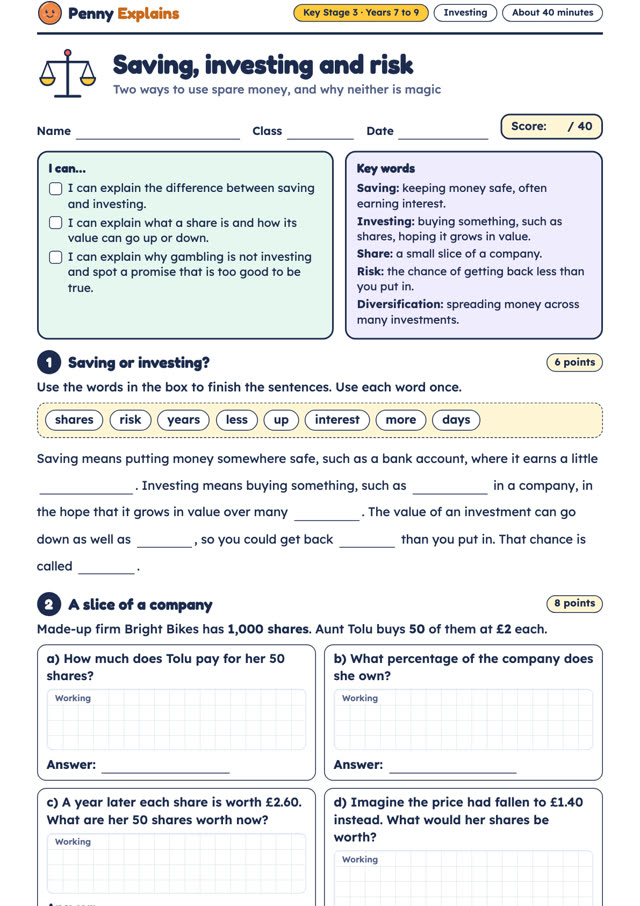
Two ways to use spare money, and why neither is magic
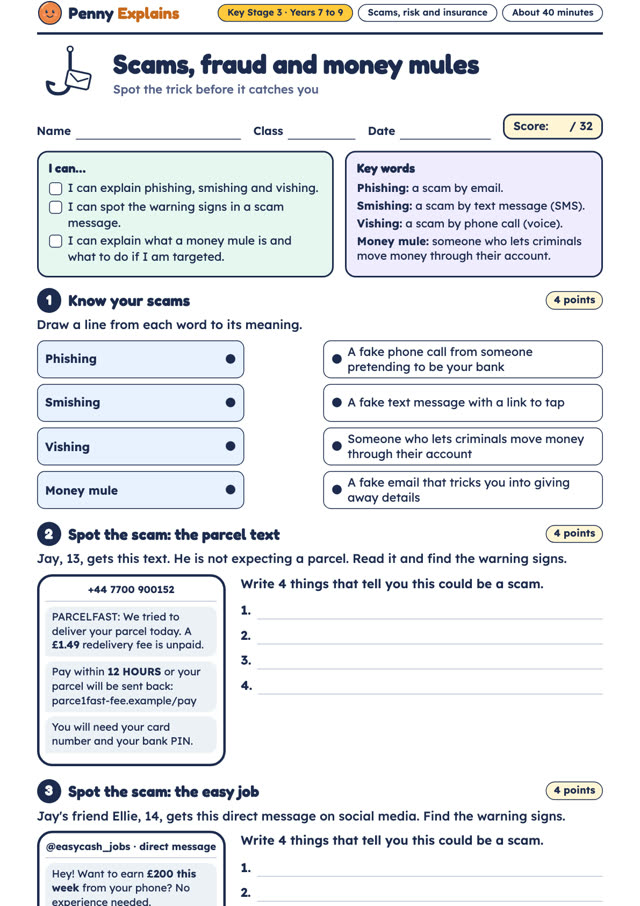
Spot the trick before it catches you
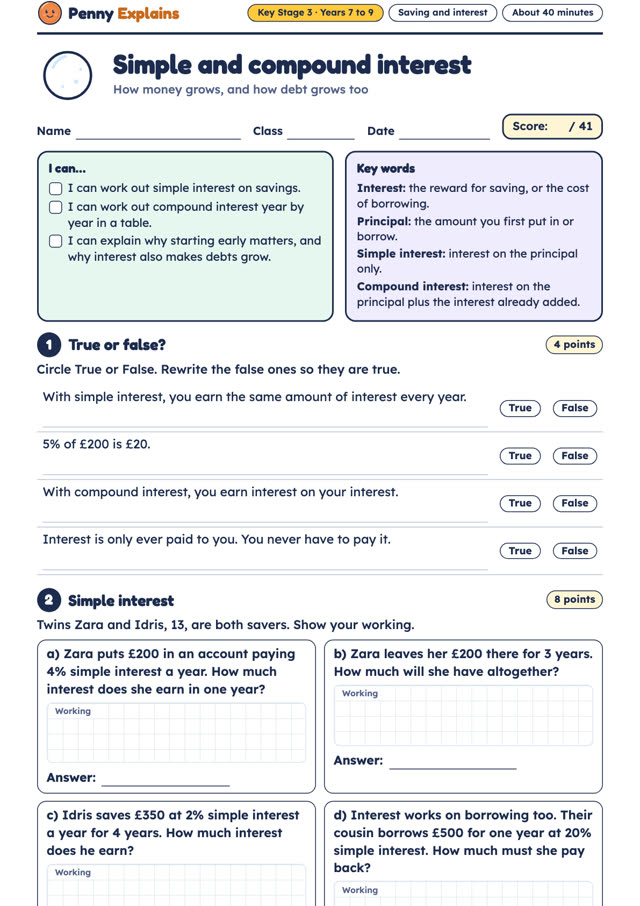
How money grows, and how debt grows too
Years 10 and 11, ages 14 to 16
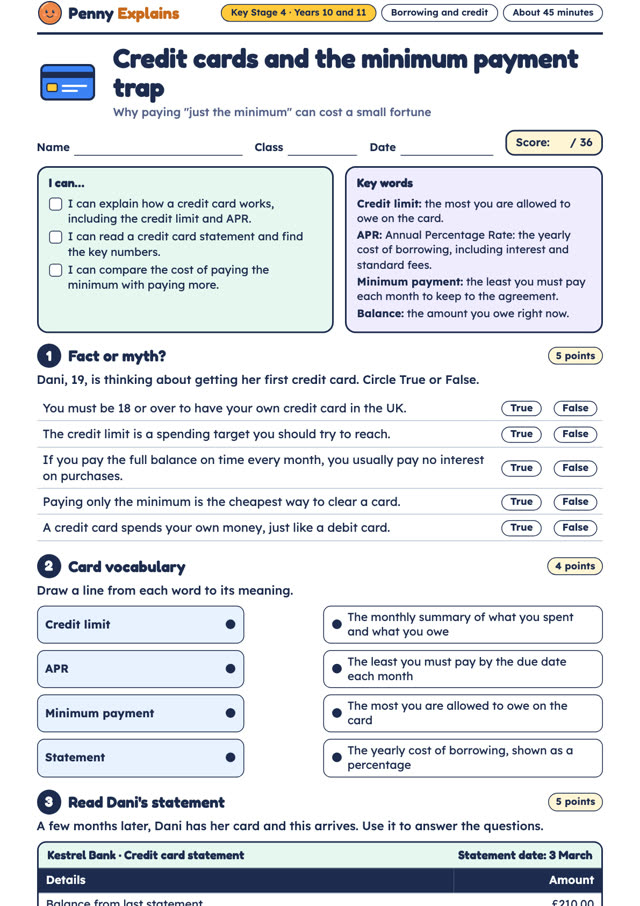
Why paying "just the minimum" can cost a small fortune
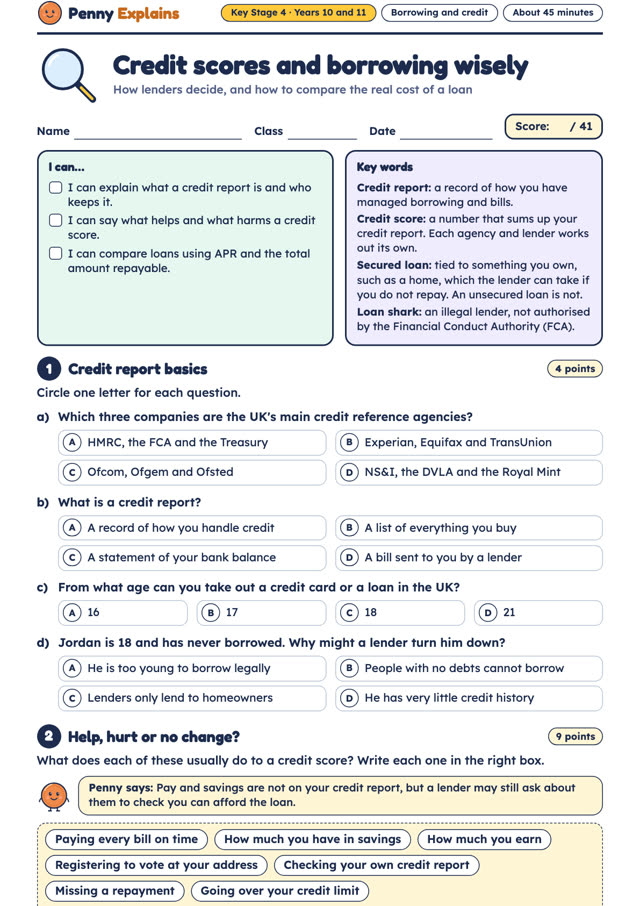
How lenders decide, and how to compare the real cost of a loan
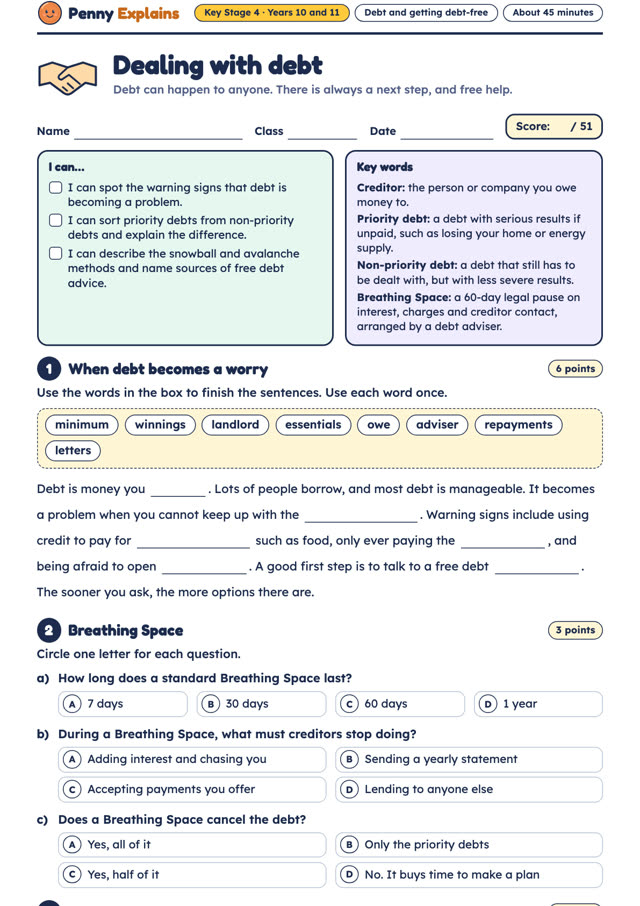
Debt can happen to anyone. There is always a next step, and free help.
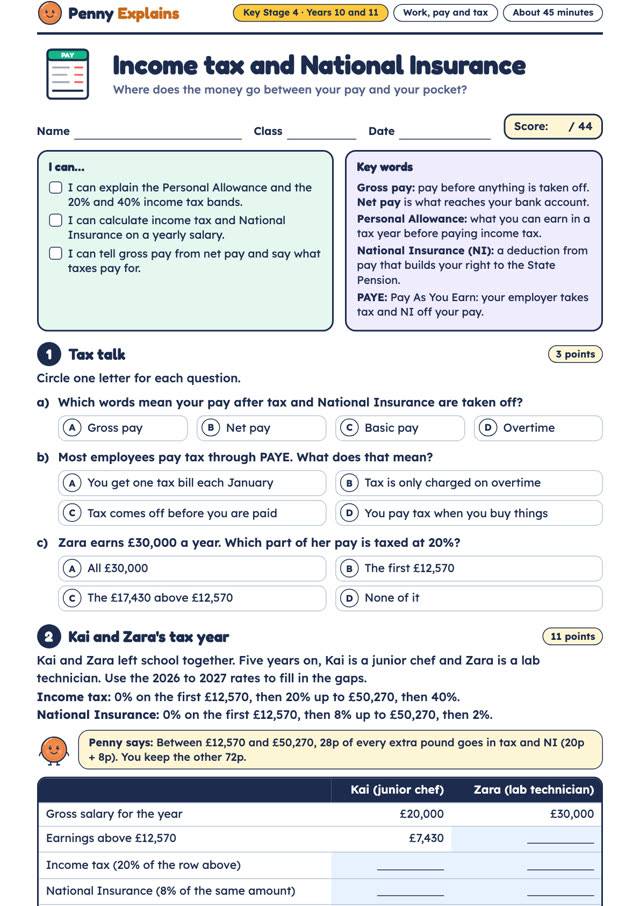
Where does the money go between your pay and your pocket?
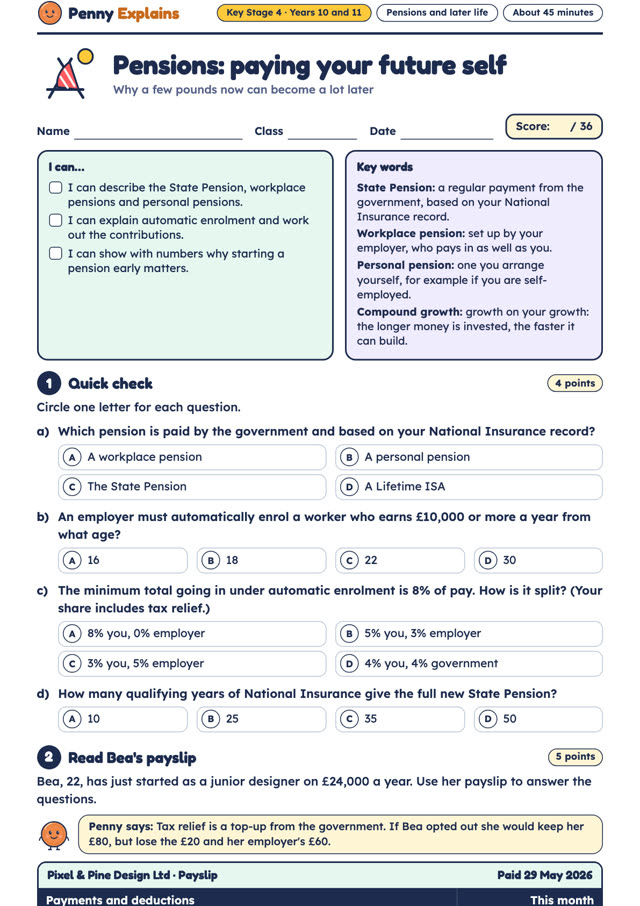
Why a few pounds now can become a lot later
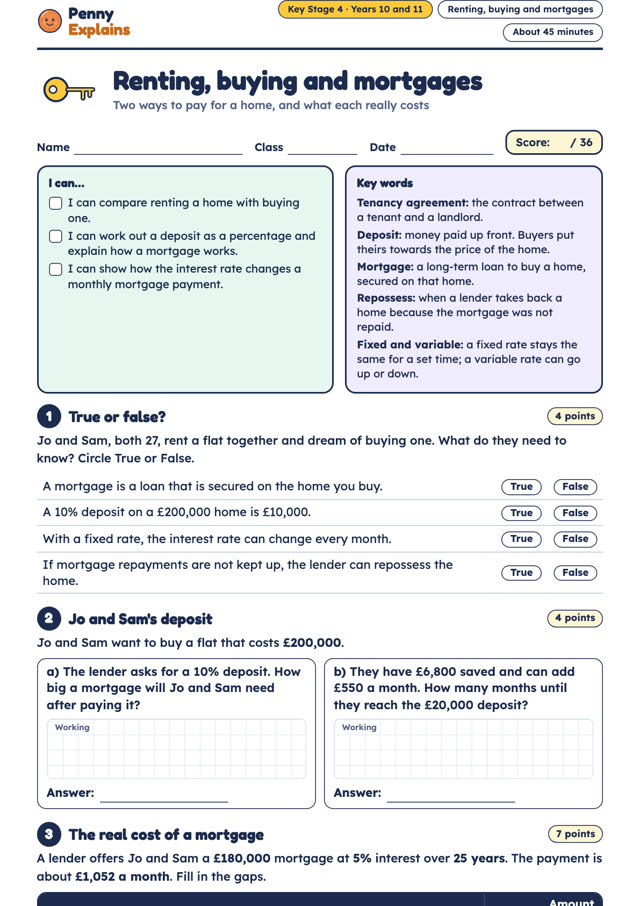
Two ways to pay for a home, and what each really costs
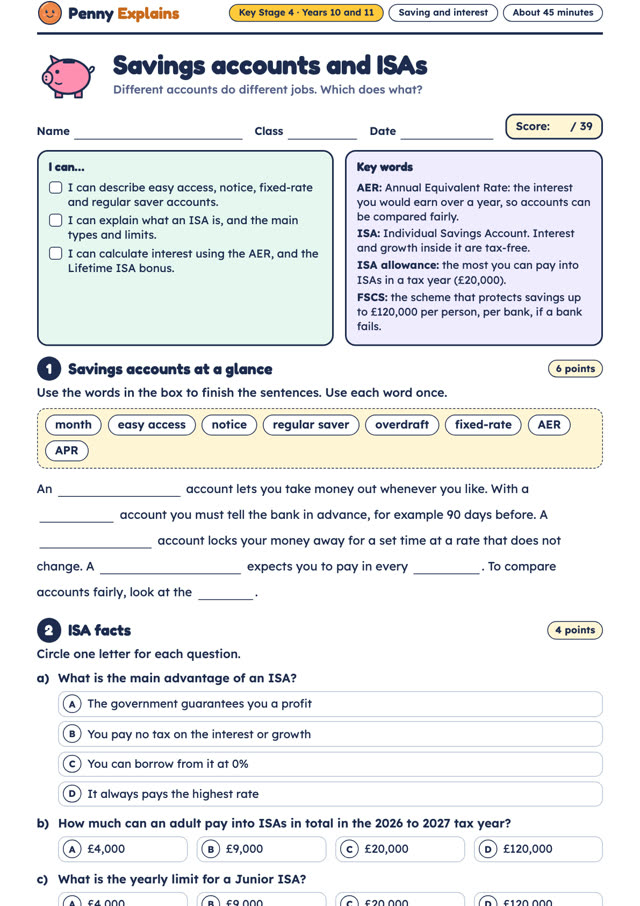
Different accounts do different jobs. Which does what?
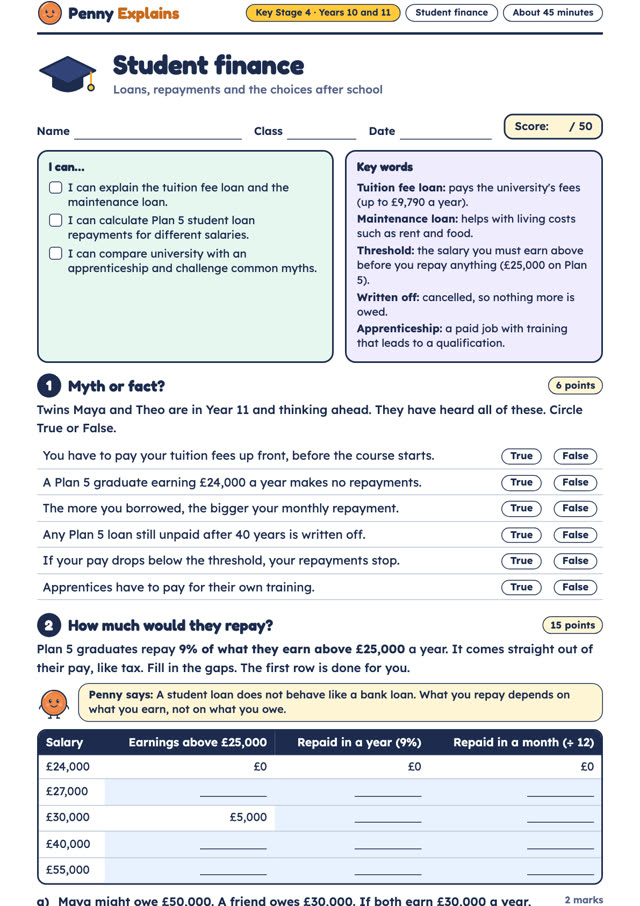
Loans, repayments and the choices after school
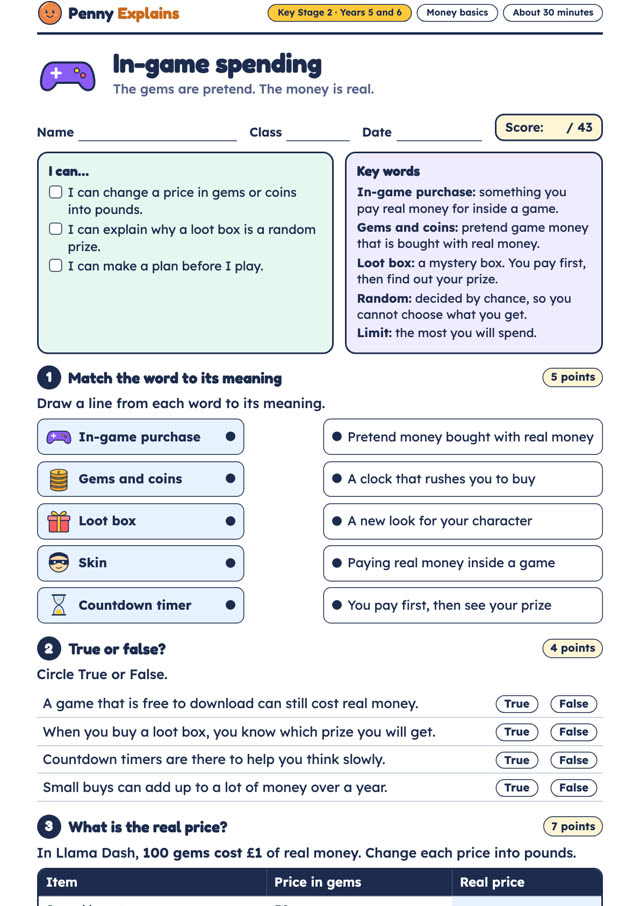
What is inside: multiple choice, coin counting, tables, sums, odd one out, real documents, true or false, sorting, spot the scam, what would you do?, word search, anagrams, open question, diamond nine, matching, ordering, crossword, fill the gaps, drawing. Each sheet starts with “I can” goals and key words, and ends with an exit ticket and a question to take home.